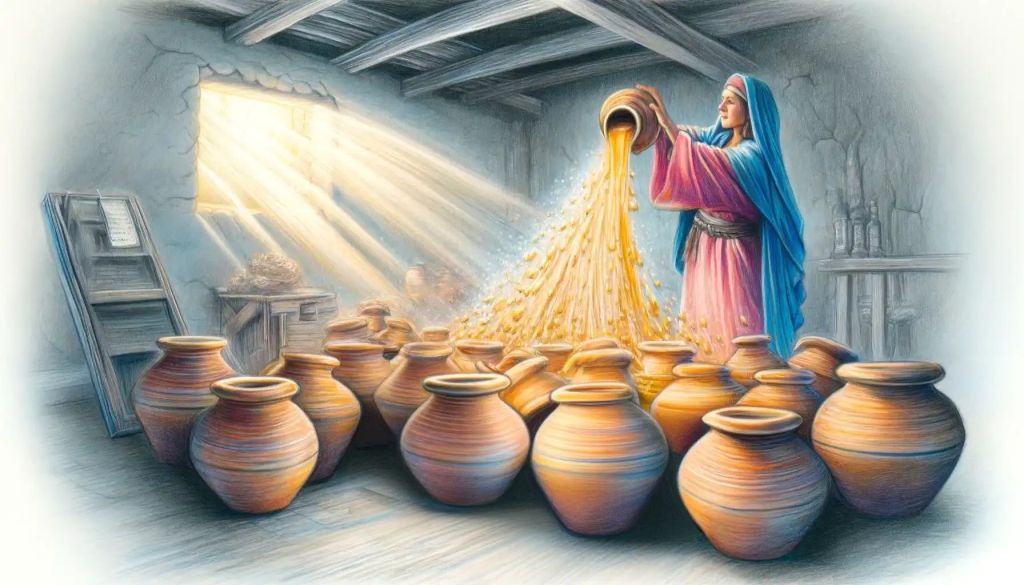
The story of the widow and the borrowed vessels, found in 2 Kings 4:1-7, is one of the most poignant narratives of divine restoration in the Bible. It’s a tale of desperation turned into abundance, where God demonstrates His ability to take something small and multiply it beyond imagination. Through the prophet Elisha, God intervenes in a widow’s life, teaching us profound lessons about faith, obedience, and the limitless provision of God.
A Woman in Crisis
The story begins with a widow in a desperate situation. Her husband, a prophet and faithful servant of God, had passed away, leaving her with significant debt. According to the customs of the time, if a debt could not be repaid, creditors could take the debtor’s children as slaves to settle the account. This woman faced not only the grief of losing her husband but also the terror of losing her sons to slavery.
In her desperation, she turned to Elisha, the man of God, pleading for help. Her situation seemed impossible—there was no income, no means to pay the debt, and no hope in sight. But it is in these moments of utter despair that God often works His greatest miracles.
A Simple Instruction of Faith
Elisha’s response to the widow was both practical and prophetic. He asked her, “What do you have in the house?” The widow responded that she had nothing except a small jar of oil. While it seemed insignificant to her, this small jar was the key to her miracle.
Elisha instructed her to go and borrow as many empty vessels as she could from her neighbors, telling her not to borrow just a few. The instruction might have seemed unusual, but the widow obeyed without hesitation, gathering every vessel she could find. This act of obedience, despite her circumstances, demonstrated her faith in God’s ability to intervene.
The Miracle of Multiplication
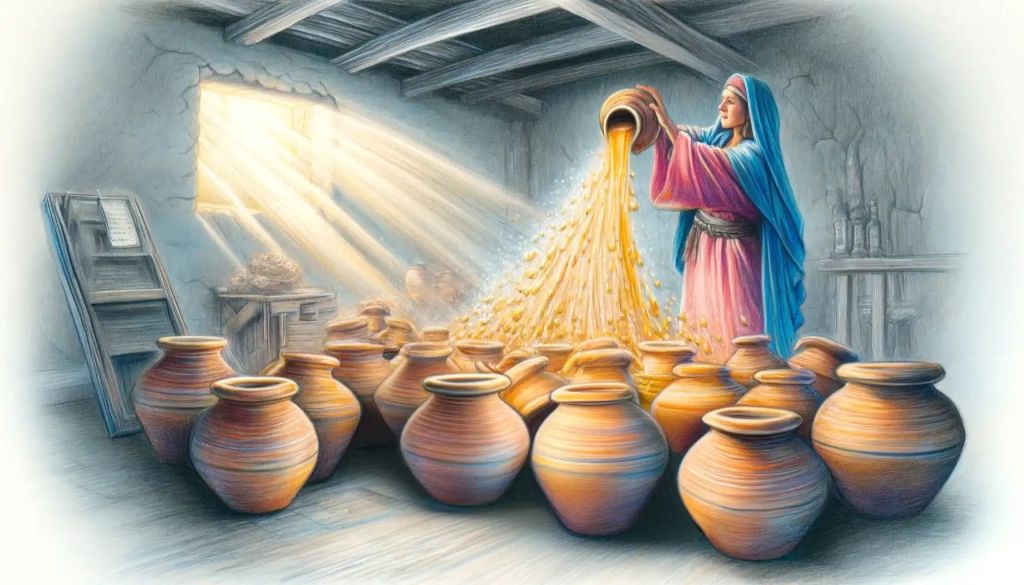
Once she had gathered the vessels, Elisha told her to shut the door behind her and her sons, and begin pouring oil from her small jar into the empty vessels. As she poured, a miracle occurred—the oil kept flowing, filling every vessel to the brim. The widow’s tiny jar of oil became an unending source of provision.
When there were no more vessels left, the oil stopped flowing. This detail highlights an important principle: God’s provision is limitless, but it is often measured by our capacity to receive it. The more vessels she had, the more oil would have been poured. God’s provision is abundant, but our faith and preparation often determine how much we receive.
Divine Restoration and Abundance
After the vessels were filled, Elisha instructed the widow to sell the oil, pay off her debts, and live on what remained. Not only was she able to settle her debts and save her sons from slavery, but there was also enough left over to provide for her family’s future. God didn’t just meet her immediate need—He gave her abundance beyond her expectations.
This story is a powerful reminder of God’s ability to bring restoration in the most hopeless situations. The widow, who had nothing but a small jar of oil, was given more than enough to meet her needs and live in financial freedom.
Lessons for Today: Faith, Obedience, and Divine Provision
God Can Use What You Already Have: The widow thought she had nothing of value, but God used the little she had to bring about a miracle. Often, we overlook the small resources or abilities we possess, but when surrendered to God, He can multiply them for His glory.
Obedience Opens the Door to Blessing: The widow’s faith and obedience to Elisha’s instruction were key to her miracle. She could have doubted, hesitated, or refused to act, but instead, she trusted God and took action. Our obedience, even in the face of uncertainty, often precedes God’s provision.
God’s Provision Is Limitless: The oil only stopped flowing when there were no more vessels left to fill. This teaches us that God’s blessings are not limited by His power but by our capacity to receive. When we prepare our hearts in faith, God is able to pour out blessings in ways we cannot contain.
Restoration Goes Beyond Our Needs: God didn’t just give the widow enough to cover her debts—He provided for her future. Divine restoration doesn’t just address the immediate crisis; it brings healing, abundance, and a fresh start.
Conclusion
The story of the widow and the borrowed vessels is a testimony of God’s heart for restoration. When life leaves us empty, broken, and in debt, God steps in with His power to multiply the little we have. He is a God of more than enough, who can turn our moments of despair into divine abundance. Like the widow, when we bring our needs before God with faith and obedience, we open ourselves to the miracle of His provision and restoration.
 Adeola's book